Glossary
Bag and print glossary
Plain definitions of the words you'll meet when ordering printed bags, from fabric weights and handle styles to inks, screens and artwork files. Where a term needs more than a line or two, we link to the guide that explains it properly.
9 min read · Updated 24 September 2026
A to C
Artwork check: our free check of your design file before anything is printed. We look at the file, the size and the colours, then email you a proof. Free artwork check.
Bag for life: a sturdier bag made to be reused for many shopping trips. In supermarkets it usually means thick plastic or woven polypropylene; cotton, canvas and jute bags do the same job. Are tote bags sustainable?
Bottle bag: a narrow bag sized to carry a bottle of wine or spirits. Paper bottle bags.
Calico: plain, unbleached cotton cloth, usually light and slightly flecked. Light natural cotton shoppers are often called calico bags.
Canvas: a heavy, tightly woven fabric, usually cotton. Our heavier canvas bags weigh 220 to 407gsm. Canvas bags.
CMYK: cyan, magenta, yellow and black, the four inks used to print full colour as tiny dots, mostly on paper. Screen printing on bags uses spot colours instead. Pantone and spot colours.
Colour separation: splitting a design into one layer for each ink. Each layer becomes its own screen.
Contrast handles: handles in a different colour from the body of the bag, as on our Cotton Tote Bag Contrast Handle.
Cotton: the natural plant fibre most printed bags are made from. It takes ink well and gets softer with use. Cotton tote bags.
Curing: heating the printed ink so it sets and bonds with the fabric. It's what makes a screen print last through washing.
D to G
Discharge printing: a method that uses a chemical to remove the dye from dark cotton, so the print shows as a lighter colour. We don't offer it; we print a white underbase instead.
Double-sided printing: printing on both sides of a bag, with the same design or two different ones. Each side has its own screens. Double-sided printed bags.
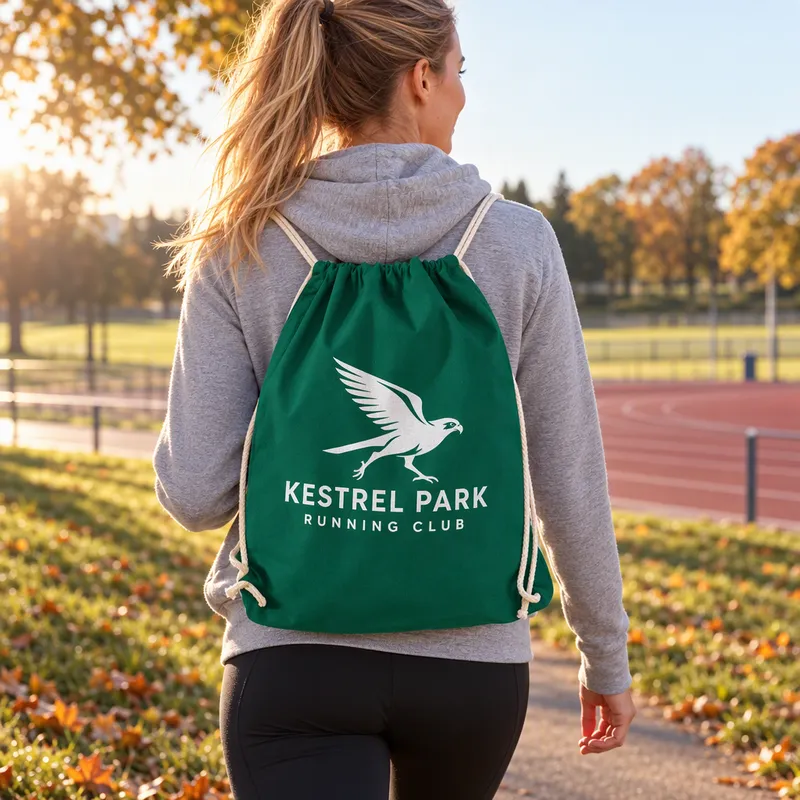
Drawstring bag: a bag closed by pulling cords through a channel at the top. The cords double as shoulder straps. Also called a gymsac or drawstring backpack. Drawstring bags.
DTG (direct to garment): printing onto fabric with an inkjet printer. It suits photographs and one-off prints. We don't offer it. Print methods compared.
Embroidery: stitching a design into fabric with thread. Hardwearing and textured, but we don't offer it. Print methods compared.
Emulsion: the light-sensitive coating used to make the stencil on a screen.
EPS, AI and PDF: file types that can hold vector artwork, which is what we like best to print from. Vector files explained.
Express: our fastest turnaround, from the next working day, on the bags we keep in stock. Express bag printing.
Flash cure: a quick burst of heat that sets one layer of ink, such as an underbase, before the next colour is printed on top.
GOTS (Global Organic Textile Standard): a certification for textiles made from organic fibres, covering how the fibre is grown and how the fabric is made. Our GOTS certified bags are listed on our organic cotton bags page.
GRS (Global Recycled Standard): a certification that checks the recycled content of a material and follows it through the supply chain. Our recycled canvas bags, Recycled Cotton Marl Tote Bag and Recycled Cotton Drawstring Stuff Bag are made from GRS certified recycled cotton. Recycled bags.
GSM: grams per square metre, the weight of a fabric. A higher number means a heavier, usually sturdier fabric. Our bags run from 140gsm cotton to 410gsm jute. Tote bag gsm guide.
Gusset: extra fabric at the base, and sometimes the sides, that gives a bag depth so it opens into a box shape. A bottom gusset gives a flat base. Tote vs shopper.
H to L
Halftone: a way of printing shades using tiny dots of a single ink. For printed bags, flat solid colours usually give the cleanest result.
Handle drop: the distance from the top of the handle to the opening of the bag. It decides whether a bag sits over the shoulder or is carried in the hand. Long handle bags.
Heat transfer: a design printed or cut onto a film and then pressed onto fabric with heat. It suits one-offs and individual names. We don't offer it. Print methods compared.
Hessian: the usual British word for coarse jute cloth. In America it's called burlap.
Juco: short for jute and cotton. It's used for fabric woven from a blend of the two, and for bags that combine them, such as our jute bags with cotton canvas panels. Juco bags.
Jute: a strong, coarse plant fibre that makes stiff, hardwearing bags. Jute bags.
Knockout: part of a design left unprinted so the colour of the bag shows through as part of the artwork. It costs nothing, because there's no ink.
Kraft paper: strong, unbleached brown paper used for many paper carrier bags. Kraft paper bags.
Laminated jute: jute with a thin plastic lining on the inside. It helps the bag stand up and wipe clean, but makes it harder to recycle. Most of our jute bags are laminated.
Laminated paper bag: a paper bag covered in a thin film for a gloss or matt finish. Laminated paper bags.
M to P
Marl: fabric woven from a mix of differently coloured fibres, which gives a softly flecked look. Our Recycled Cotton Marl Tote Bag comes in several marl colours.
Mesh count: the number of threads per inch in a screen's mesh. Finer mesh holds finer detail; coarser mesh lays down a heavier layer of ink.
Minimum order: we don't have a fixed one. Prices on each bag's page start from 25 bags, and you can type in any quantity. Small runs.
Natural: the creamy, off-white colour of undyed cotton. It's the most popular bag colour, and usually the best value. Natural bags.
OEKO-TEX Standard 100: a label showing that a textile has been tested for harmful substances. Our recycled Nutshell bags carry it. Nutshell bags.
Organic cotton: cotton grown without synthetic pesticides and fertilisers, usually certified to a standard such as GOTS. Organic cotton bags.
Ounces (oz): fabric weight in ounces per square yard, common in America. One ounce is roughly 34gsm.
Pantone: a numbered library of colours, each with an ink recipe, so a colour can be matched anywhere. We match to Pantone references if you give them. Pantone and spot colours.
Plastisol: a thick, opaque screen printing ink that sits on the surface of the fabric and is set with heat. It's one of the most widely used inks for printing on fabric.
Print area: the part of a bag that can be printed, clear of seams, hems, handles and gussets. Designing for a tote.
Proof: a picture of your design on the bag, showing its size, position and colours, which we email before printing. Nothing is printed until you approve it.
R to S
REACH: the rules in the UK and EU that control harmful chemicals in products, including textiles. It's a regulation that products must meet, not a certificate.
Recycled cotton: cotton fibre recovered from waste fabric and spun into new yarn. Most of our recycled bags use post-consumer cotton, from textiles that have already been used. Recycled bags.
Registration: lining up the screens so every colour lands exactly where it should.
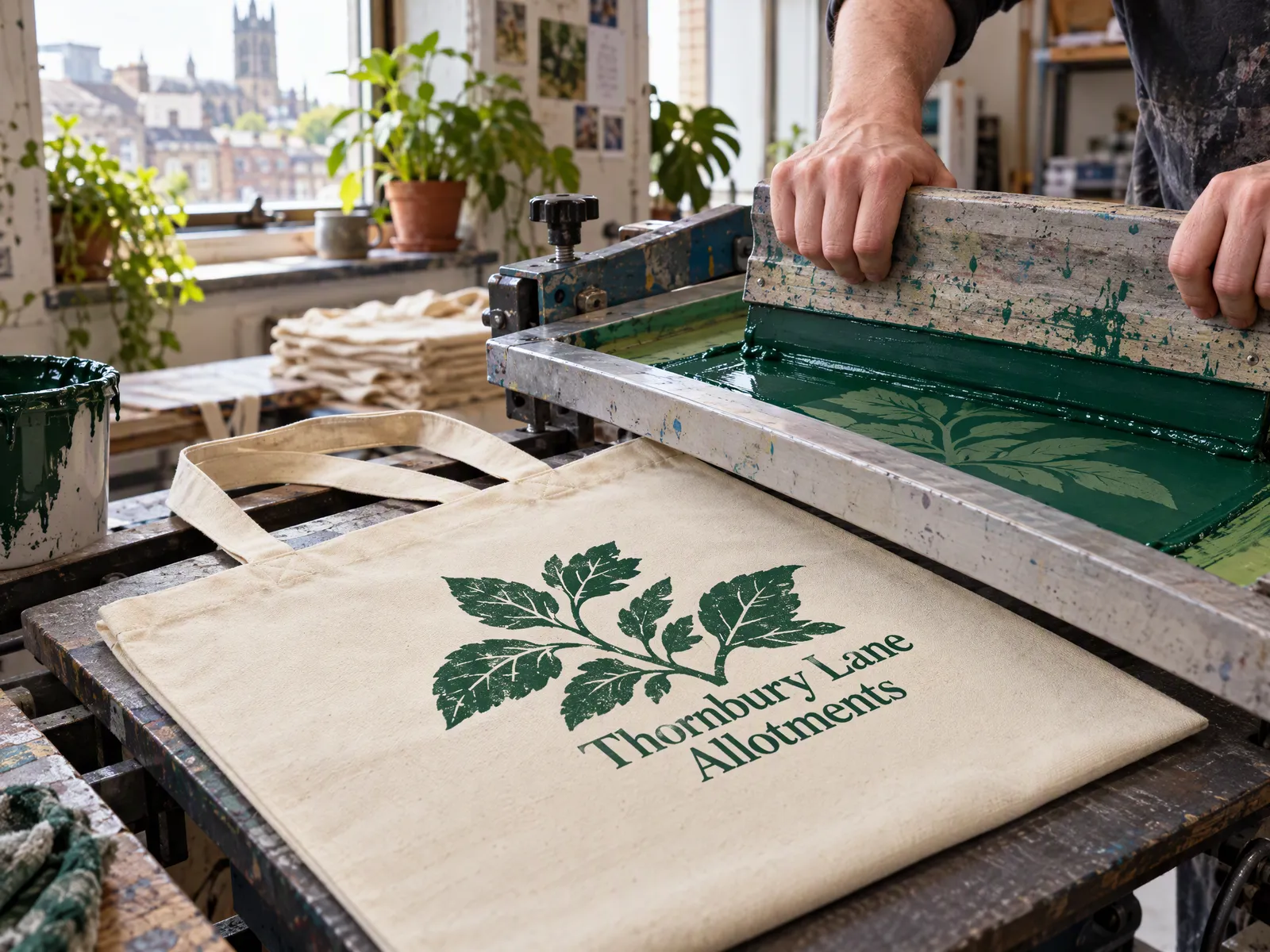
Screen: a frame with fine mesh stretched across it, carrying the stencil for one colour of your design.
Screen charge: a one-off charge for making each screen. You pay it once per colour, per side, however many bags you order, which is why bigger runs cost less per bag. What each colour adds.
Screen printing: printing by pushing ink through a mesh stencil, one colour at a time. It's the only way we print. How screen printing works.
Sedex and amfori BSCI: organisations that audit factories on working conditions and share the results with buyers. They audit factories, not individual products. The maker of our Westford Mill bags lists its audited factories and publishes a modern slavery statement. Westford Mill bags.
Shopper: a flat bag with two handles and no gusset, classically 38 x 42cm. Tote vs shopper.
Sling: a bag with one long handle instead of two, worn over one shoulder or across the body. Cotton Sling Tote Bag.
Spot colour: a single ink mixed to one exact shade and printed as a solid colour. Screen printing uses spot colours, from 1 to 4 on our bags. Pantone and spot colours.
Squeegee: the rubber blade pulled across a screen to push ink through the mesh onto the bag.
Stuff bag: a small drawstring pouch, often used as packaging. Our Recycled Cotton Drawstring Stuff Bag comes in six sizes.
T to W
Tote: in everyday speech, any fabric bag with two handles. In the bag trade, a tote usually has a gusset, so it has depth and holds more than a flat shopper. Tote vs shopper.
Turnaround: how long your order takes. Standard is 7 to 10 working days from approved artwork, and express is from the next working day on selected bags. Delivery and turnaround.
Twisted and flat handles: the two classic paper bag handles, made from twisted paper cord or from flat paper strips glued inside the bag. Twisted handle and flat handle paper bags.
Underbase: a layer of white ink printed beneath light colours on a dark bag so they stay bright. It has its own screen, so it counts as a colour. Printing on dark bags.
Unlaminated jute: jute with no plastic lining, softer and more natural in feel. See our Unlaminated Jute Bag.
Vector file: artwork made of shapes and lines rather than pixels, so it can be scaled to any size without going blurry. PDF, AI and EPS files can hold vectors. Vector files explained.
Water-based ink: a screen printing ink that soaks into the fibres rather than sitting on top, giving a softer feel.
Webbing handles: flat, woven strap handles, like those on our Premium Recycled Canvas Stand Up Tote.
Woven polypropylene: a woven plastic fabric used for many supermarket bags for life.
Guides that go further
Print guide
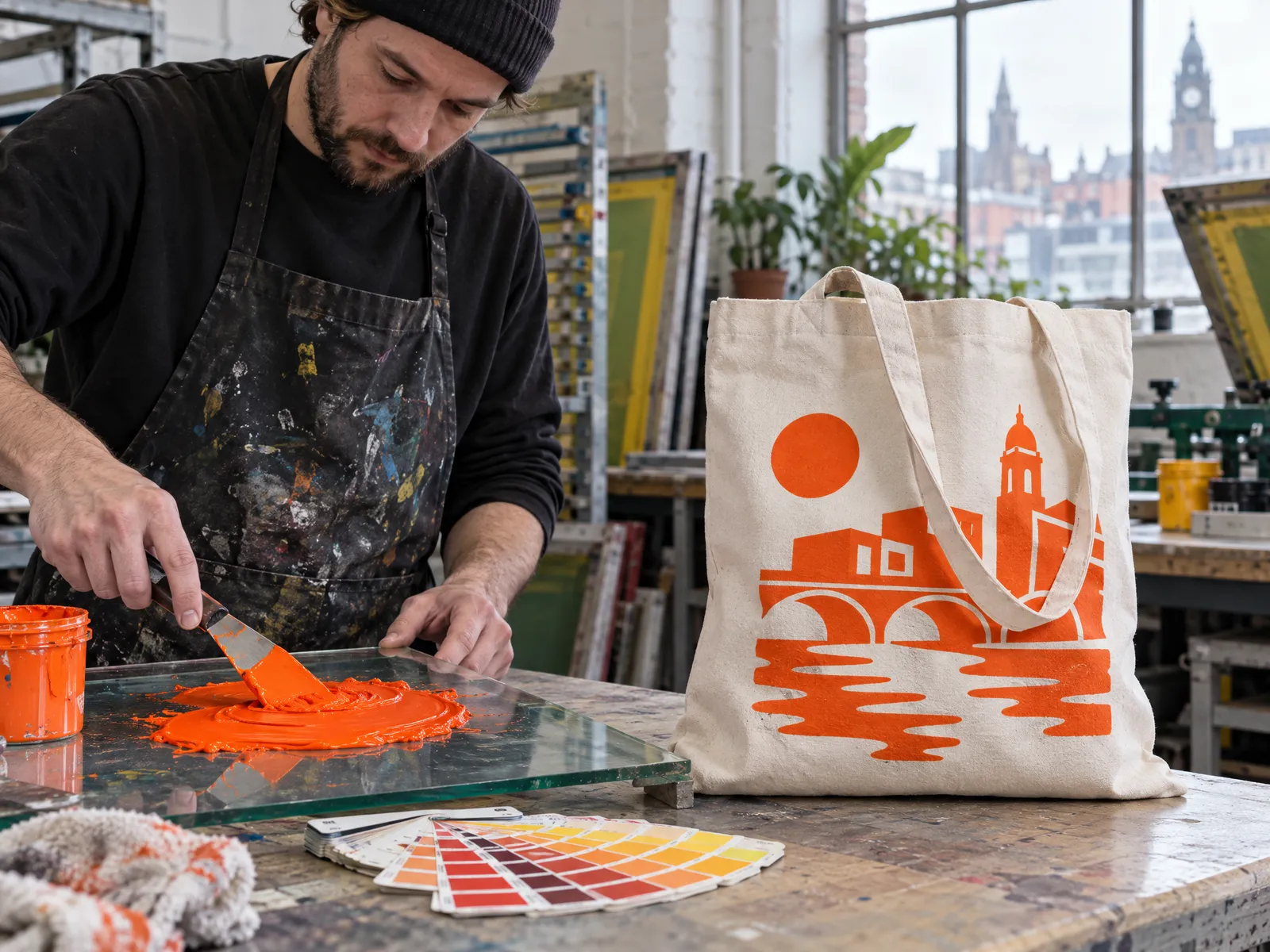
How screen printing works
Screens, stencils and squeegees: how a printed bag is made, and why it lasts.
Print guide
Printing on dark bags
Which inks work on black and navy bags, and when you need a white underbase.
Print guide
Pantone and spot colours
What spot colours are, how Pantone matching works on fabric and what to send us.
Design guide
Designing for a tote
Colours, sizes, lines and files: how to design a tote bag that prints well.
Can't find a word?
If something on our site or your proof doesn't make sense, ask us. We'll explain it in plain English.