



Print guide
How screen printing works
Screen printing pushes ink through a fine mesh stencil onto the bag, one colour at a time. Each colour has its own screen, which is why the number of colours in your design sets the price. Once the ink is cured with heat it bonds with the fabric, and with sensible care it lasts as long as the bag does.
6 min read · Updated 24 September 2026
What is screen printing?
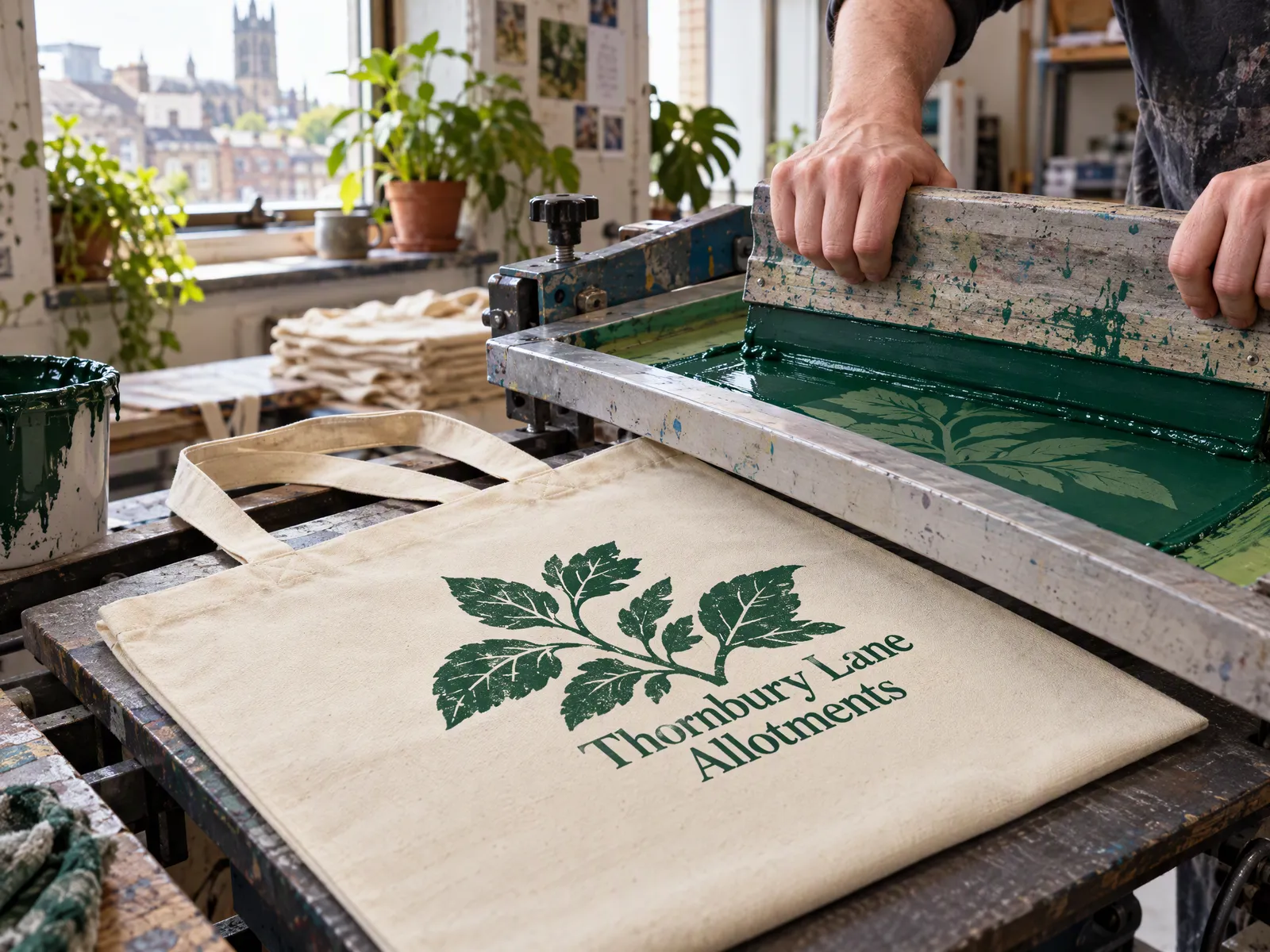
Screen printing is a way of printing a design by forcing ink through a stencil held in a fine mesh. The screen is a frame with polyester mesh stretched tight across it. Most of the mesh is blocked off, and only the shape of your design is left open. Ink is spread across the screen and pulled over it with a rubber blade called a squeegee, which pushes the ink through the open mesh and onto the bag underneath.
It used to be called silk screen printing, because the mesh was once made of silk. The process is the same.
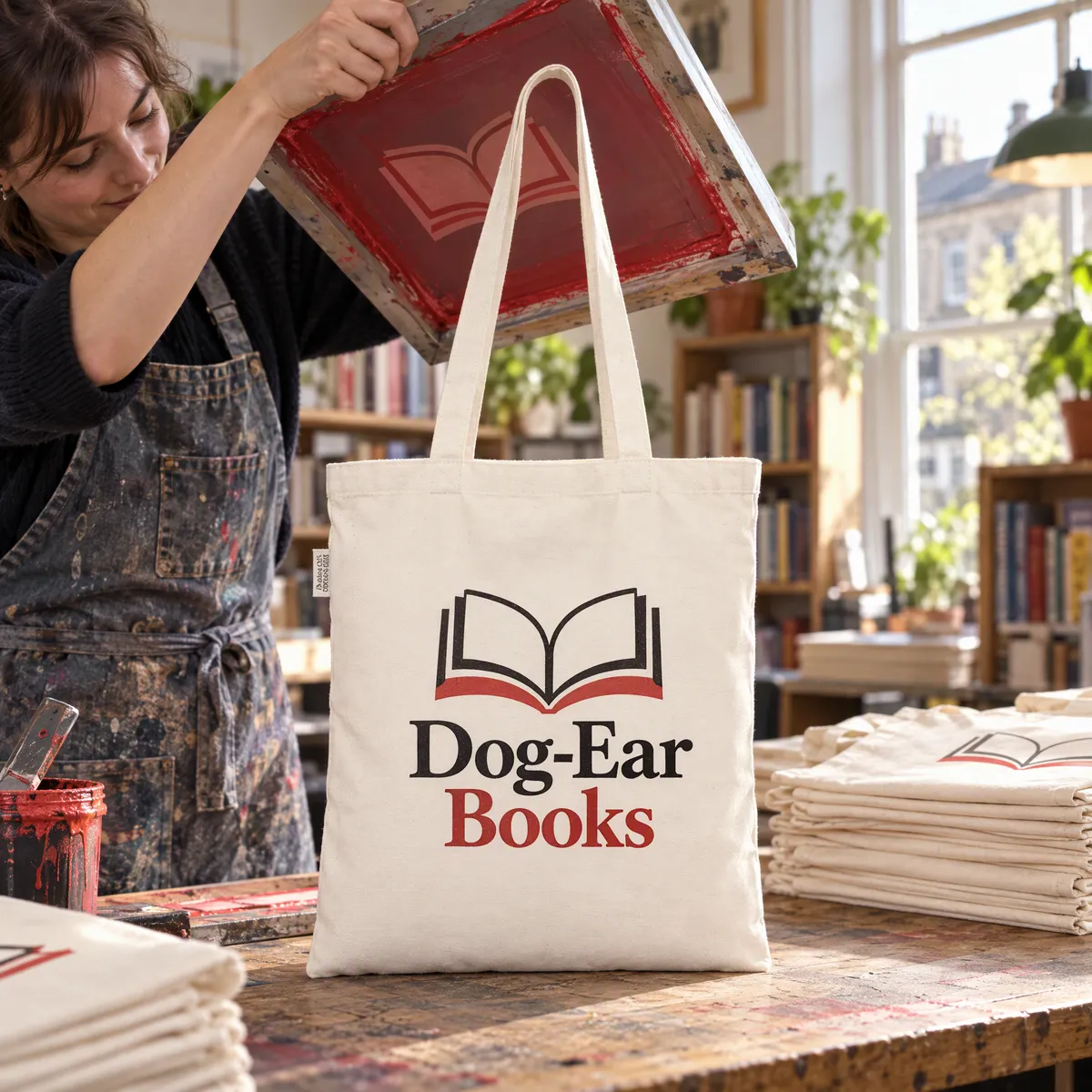
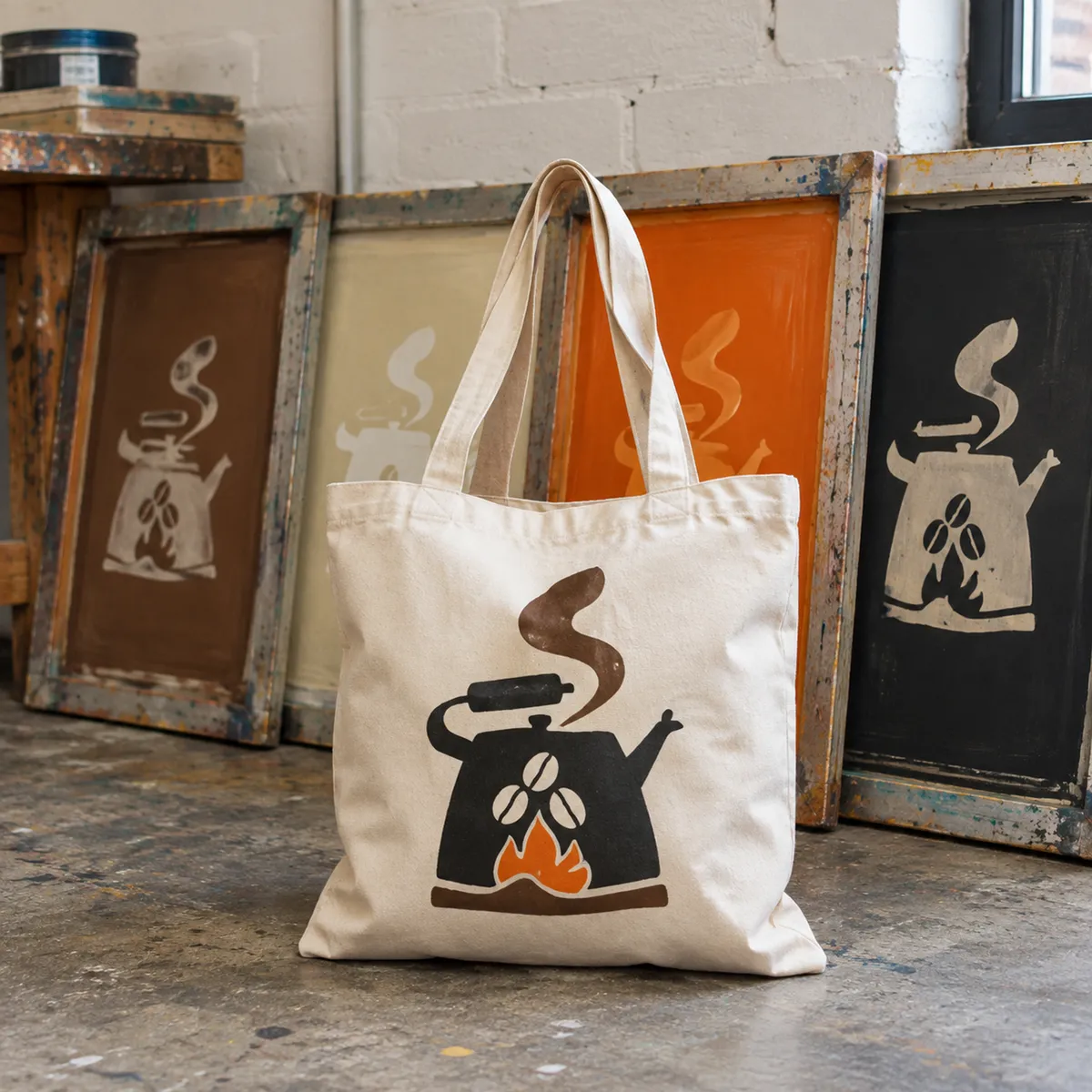
Each screen prints one ink, so a design in three colours needs three screens, printed one after another. That's why screen printing uses spot colours: each ink is mixed to a single shade, rather than built up from dots of cyan, magenta, yellow and black like a photo on paper. The result is solid, bright colour with crisp edges, which is exactly what a logo on a bag needs.
Why it suits bags
- It lasts. The ink is cured into the fabric, so it stands up to years of use.
- It's bold. Thick, opaque ink shows up well even on textured cotton, canvas and jute.
- It gets better value with quantity. Once the screens are made, each extra bag only costs the bag and the print, so the price per bag falls as the run grows.
How a bag gets printed, step by step
Artwork check and proof
We check your file for free and email you a proof showing the size, position and colours on the bag. Nothing is printed until you approve it.
Colour separation
The design is split into one layer for each ink. On a dark bag, a white underbase layer is added for any light colours.
Films
Each layer is printed in solid black onto clear film, the same size it will be on the bag.
Making the screens
Each screen is coated with a light-sensitive emulsion. The film goes on top and the screen is exposed to strong light. The emulsion hardens where the light hits it, and the design area, shaded by the film, washes out with water to leave open mesh.
Mixing the ink
Each ink is matched to your file, or to your Pantone references if you gave them.
Lining up
The screens are fixed in the press and lined up so every colour lands exactly where it should. Printers call this registration.
Printing
The bag is laid flat on the press board, the screen comes down, and the squeegee pulls ink across it. For more than one colour, the next screen follows, one colour at a time.
Curing
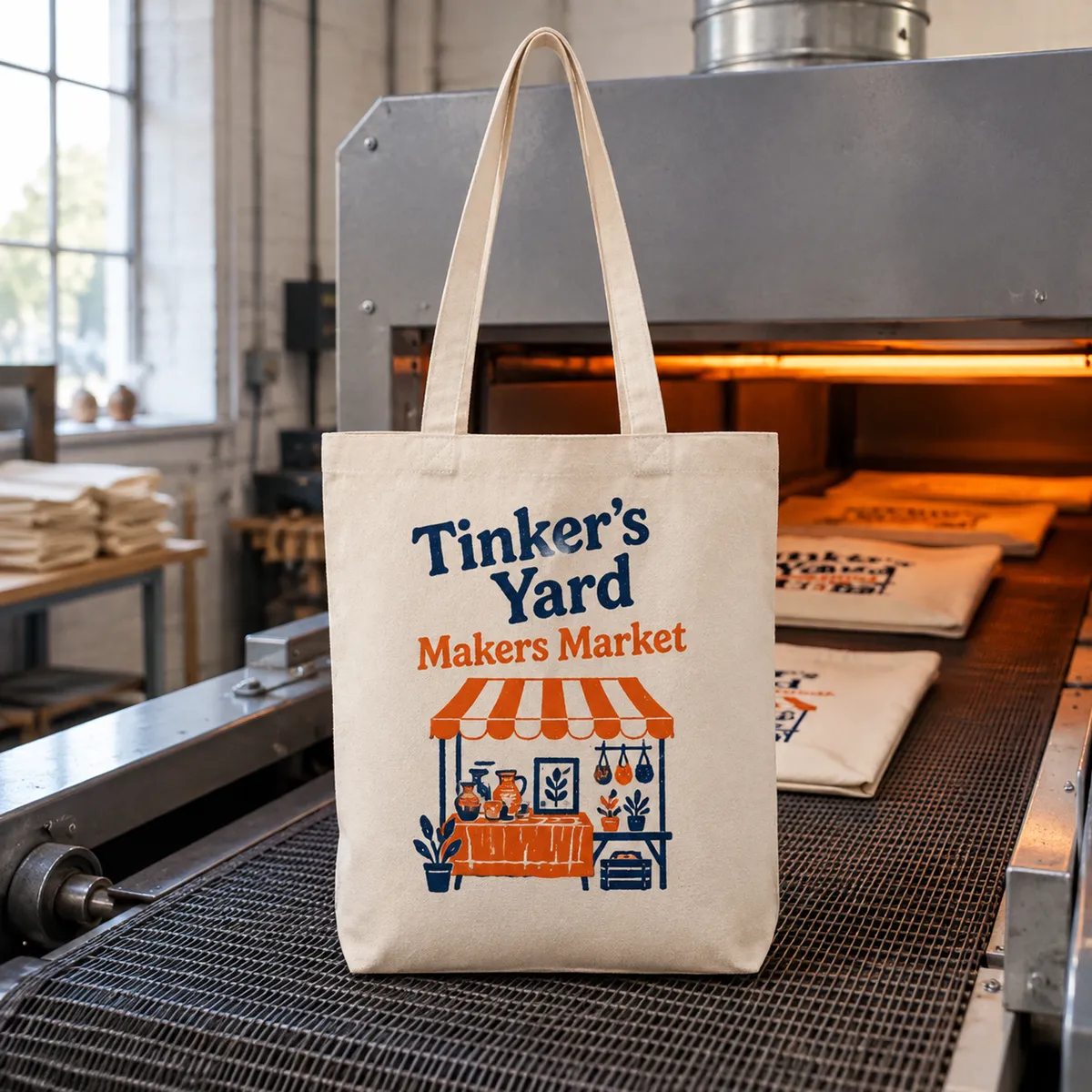
The printed bags go through heat, which sets the ink so it bonds with the fibres and survives washing.
Packing and delivery
The bags are checked, counted and packed, then sent by DPD Next Day to UK mainland addresses.
Why each colour adds to the price
Every colour needs its own screen, its own ink and its own pass through the press. That's where the cost of screen printing comes from:
- A one-off screen charge for each colour. This covers making the screen and setting it up, and you pay it once per job however many bags you order.
- A print cost for each bag. Every extra colour adds a little more, because each bag goes under another screen.
- Each side is a separate print. Printing on both sides needs screens for each side.
Because the screen charge is a fixed amount, it matters most on small runs. Spread across 25 bags it adds a lot to each bag; spread across 500 it adds very little. That's why bigger runs cost less per bag, and why a one-colour design is the best value way to print. Try our colour cost calculator or read the tote bag printing price guide to see the numbers.
How many colours can screen printing do?
In theory, as many as there are screens. We print 1 to 4 spot colours, on one side or both, which covers almost every logo and illustration. Designs built from photographs, soft shadows or smooth gradients don't break down neatly into a few flat inks, so they suit a different method. Our print methods guide compares screen printing with digital printing, heat transfer and embroidery, and says honestly when one of those would be the better choice.
What colours and quantity do to the price
Live prices per bag for our Recycled Cotton Tote Bag printed on one side, with the screen charge spread across the run.
| Quantity | 1 colour | 2 colours | 3 colours | 4 colours |
|---|---|---|---|---|
| 25 bags | £2.82£70.50 total | £4.67£116.75 total | £6.52£163.00 total | £8.37£209.25 total |
| 50 bags | £2.02£101.00 total | £3.07£153.50 total | £4.12£206.00 total | £5.17£258.50 total |
| 100 bags | £1.62£162.00 total | £2.27£227.00 total | £2.92£292.00 total | £3.57£357.00 total |
| 250 bags | £1.38£345.00 total | £1.79£447.50 total | £2.20£550.00 total | £2.61£652.50 total |
| 500 bags | £1.30£650.00 total | £1.63£815.00 total | £1.96£980.00 total | £2.29£1,145.00 total |
| 1,000 bags | £1.26£1,260.00 total | £1.55£1,550.00 total | £1.84£1,840.00 total | £2.13£2,130.00 total |
Live prices for the Recycled Cotton Tote Bag in Natural, printed on one side, ex VAT. Each price includes the one-off £40.00 screen charge per colour, spread across the order. Delivery is added in the basket.
How long does screen printing last?
A properly cured screen print doesn't wash off. The heat sets the ink so it grips the fibres, and on a bag that's looked after it will usually last as long as the fabric itself.
What wears a print out is heat and rubbing: hot washes, tumble dryers, an iron run straight across the design, and bleach. Over a long life, large solid areas of ink can soften, fade a little or show fine cracks where the bag is folded again and again. A few simple habits keep that at bay, and they're in our wash and care guide.
Does the print feel different on different bags?
A little. On a smooth, light cotton shopper the ink sits flat and crisp. On heavier canvas and jute, the weave gives the print a slight texture, and the finest lines and smallest text are harder to hold. Our guide to designing for a tote covers how bold to go.
Questions people ask
Is screen printing the same as silk screen printing?
Yes. The mesh used to be silk, which is where the name comes from. Today it is polyester, but the process is the same.
Does screen printing wash off?
No. Once cured with heat, the ink bonds with the fabric and won't wash off. Washing cool, inside out and away from the tumble dryer keeps it looking its best. See our wash and care guide.
Is screen printing worth it for a small order?
It can be. The screen charge is a fixed cost, so it adds more to each bag on a small run. We have no fixed minimum, and each bag's page shows live prices from 25 bags, so you can see exactly what a small run costs. Small runs explained.
Can you screen print a photo onto a bag?
Not well with spot colours. Photos are made of thousands of shades, and screen printing lays down a few solid inks. A bold, flat-colour version of your idea usually works better on a bag. If it has to be the photo, our print methods guide explains the alternatives.
Can you print on both sides of the bag?
Yes. Choose two sides in the bag's configurator. Each side has its own screens, and the two sides can carry different designs. Double-sided printed bags.
Can each bag have a different name on it?
No. Screen printing puts the same print on every bag. For weddings, teams and schools, a single design with every name on it works well.
See the price for your design
Choose a bag, pick your number of colours and see the live price. Or send your artwork first and we'll check it for free.